In 2023, a maintenance worker at a Midwest manufacturing plant reached into a conveyor system during routine servicing. The machine cycled unexpectedly. The result: a life-altering injury. The cause? A missing lockout tagout policy and procedure. This incident wasn’t an anomaly—it’s a symptom of inconsistent safety execution in environments where machinery and energy sources are part of daily operations.
The lockout tagout (LOTO) policy and procedure isn't just a compliance checkbox. It’s a systematic, life-preserving framework that ensures machines are de-energized and cannot restart during maintenance or servicing. When done right, it prevents electrocution, crushing injuries, amputations, and fatalities. When ignored or poorly implemented, the consequences are severe and often irreversible.
This guide cuts through the regulatory noise and delivers a practical, actionable breakdown of what a robust LOTO policy and procedure look like, why consistency matters, and how to implement it effectively—no fluff, no jargon, just real-world utility.
What Is a Lockout Tagout Policy and Procedure?
At its core, a lockout tagout policy and procedure is a formalized plan to isolate hazardous energy sources before maintenance work begins. "Lockout" refers to the physical locking of energy-isolating devices—such as circuit breakers, valves, or disconnect switches—using a personal lock. "Tagout" involves attaching a warning label that identifies who locked the device, when, and why.
While lockout physically prevents re-energization, tagout serves as a visual and informational backup. Together, they form a dual-layer defense against accidental startup.
A proper LOTO policy outlines the organization’s commitment to energy control, defines roles, and mandates training. The procedure specifies step-by-step actions employees must follow for each piece of equipment. These aren’t one-size-fits-all. A hydraulic press requires different steps than a boiler or a robotic arm.
Why OSHA Requires LOTO—and What Happens When You Don’t Comply
The Occupational Safety and Health Administration (OSHA) standard 29 CFR 1910.147 is the backbone of LOTO regulation in the U.S. It mandates that employers implement a written energy control program, including procedures, training, and periodic inspections.
Non-compliance isn’t just risky—it’s expensive. In 2023, OSHA issued over $5 million in penalties related to LOTO violations. More concerning, the agency identified LOTO failures in over 70% of inspected facilities with hazardous machinery.
Consider this real case: A food processing plant in California was fined $189,000 after an employee was pulled into a mixer while cleaning it. The machine wasn’t locked out. An investigation revealed that while a LOTO policy existed on paper, no equipment-specific procedures were documented, and workers hadn’t been trained in three years.
Common compliance gaps include: - No written procedures for specific machines - Inadequate employee training records - Failure to conduct annual audits - Using tagout without lockout where feasible - Shared or master locks instead of individual ones
OSHA doesn’t penalize intent—it penalizes failure to protect. And that starts with a living, enforced LOTO policy and procedure.
Key Components of an Effective LOTO Policy
A strong LOTO policy isn’t a document buried in a binder. It’s a living commitment to safety, visible in daily operations. Here are the essential elements every policy must include:
1. Clear Scope and Purpose Define which equipment and energy sources (electrical, mechanical, hydraulic, pneumatic, chemical, thermal) the policy covers. State the goal: to prevent injury during servicing and maintenance.
2. Defined Roles and Responsibilities

- Authorized Employees: Those trained to implement LOTO procedures. They apply locks and tags.
- Affected Employees: Operators who use or work near equipment but don’t perform servicing. They must understand the purpose of LOTO and not attempt to restart locked equipment.
- Supervisors: Responsible for ensuring compliance, scheduling audits, and verifying training.
3. Training and Retraining Requirements Initial and annual retraining are mandatory. Training must be equipment-specific and include hands-on practice. Records should be kept for at least three years.
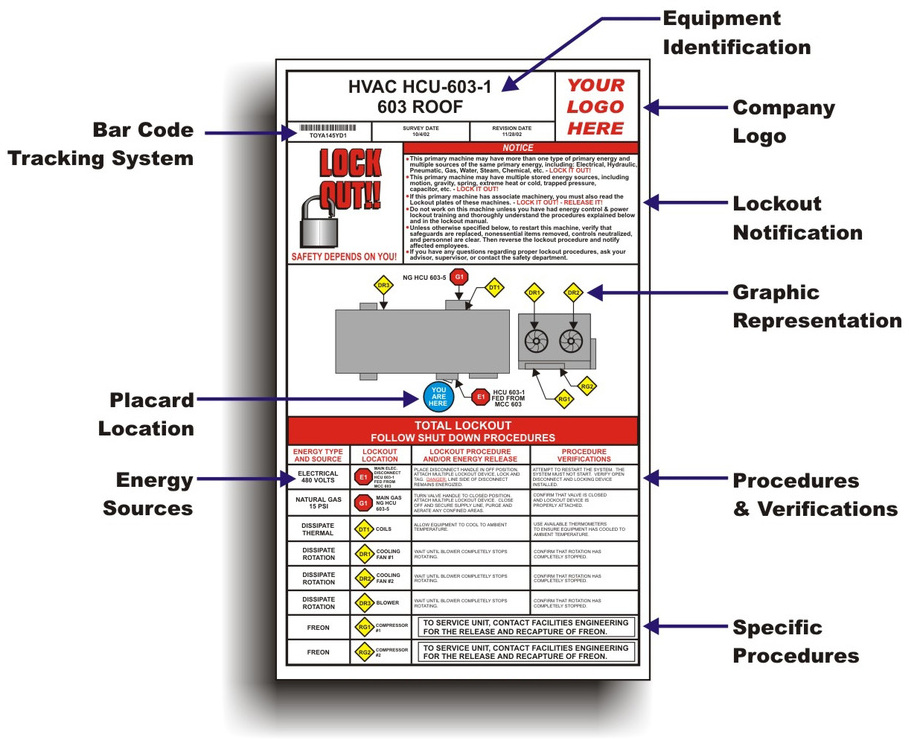
4. Procedure for Procedure Development The policy should mandate that a detailed LOTO procedure be created for every machine or system with hazardous energy. This includes identifying all energy sources, isolation points, and verification steps.
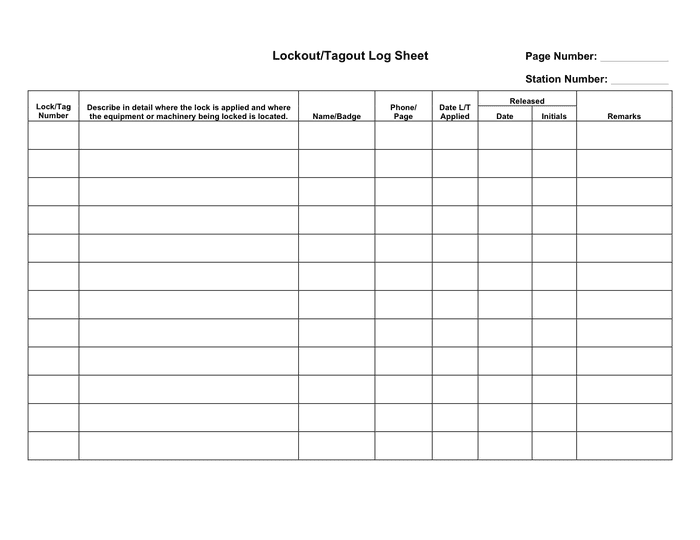
5. Audit and Compliance Verification Annual inspections are required. A designated person—typically a supervisor or safety officer—must observe an authorized employee performing a LOTO procedure and verify it matches the written document.
Building a Step-by-Step LOTO Procedure
A template won’t save lives. A properly executed procedure will. Each LOTO procedure should be machine-specific and follow OSHA’s seven-step process:
- Preparation
- Determine the type and magnitude of energy involved. Identify all isolation points (e.g., main power disconnect, hydraulic shutoff valve).
- Notification
- Inform all affected employees that maintenance is starting and equipment will be shut down.
- Shutdown
- Turn off the machine using normal stopping procedures.
- Isolation
- Physically disconnect or block all energy sources. This may include turning off breakers, closing valves, or blocking moving parts.
- Application of Locks and Tags
- Each authorized employee applies their personal lock and tag. No shared locks. Each tag must include the worker’s name, date, reason for lockout, and contact info.
- Control of Stored Energy
- Relieve or block residual energy. This includes bleeding hydraulic lines, discharging capacitors, or lowering suspended parts.
- Verification of Isolation
- Attempt to restart the machine (in safe mode, if possible) to confirm zero energy. Use voltage testers, pressure gauges, or other tools to verify.
Only after all steps are completed should maintenance begin.
Example: On a CNC lathe, stored rotational energy in the spindle must be dissipated. After locking the main power disconnect, the technician engages the spindle brake, verifies no movement, and uses a lockout hasp with a personal padlock. A red tag states, “Locked out by J. Rivera – 05/22 – Bearing replacement.”
Common LOTO Mistakes—And How to Avoid Them
Even facilities with policies make critical errors. These are the most frequent missteps:
✘ Using Tags Without Locks Where Locks Are Possible Tagout alone is less secure. OSHA allows tagout only if a lock can’t be applied. Yet many plants rely on tags for convenience. Fix: Invest in lockable disconnects and standardized hasps.
✘ Group Lockout Confusion In multi-person maintenance, each worker must apply their own lock. A common mistake is using one lock with multiple keys. Fix: Use a group lockout box. Each worker places their key inside, locks the box, and the primary technician holds the only key to the main lockout point.
✘ Skipping Stored Energy Control Workers forget springs, gravity, or pressurized systems. Fix: Include stored energy checklists in every LOTO procedure.
✘ Incomplete or Vague Procedures Phrases like “shut off power” are insufficient. Fix: Specify exact locations—e.g., “Turn off circuit breaker #42 in Panel B.”
✘ No Periodic Audits Without annual reviews, procedures become outdated. Fix: Schedule audits like safety drills. Document findings and correct gaps immediately.
LOTO Devices: Tools That Make Compliance Practical
The right hardware reduces human error. Not all locks and tags are equal. Here’s what to use—and why.
| Device Type | Purpose | Best Practice Use Case |
|---|---|---|
| Safety Padlocks | Personal lock for energy isolation | One lock per employee, keyed differently |
| Lockout Hasps | Allows multiple locks on one disconnect | Group maintenance tasks |
| Valve Lockouts | Prevents valve reopening | Gas lines, steam systems |
| Circuit Breaker Locks | Secures breaker in OFF position | Electrical panels |
| Tagout Tags | Communicates lockout status | Must be durable, non-removable |
Choose devices that are: - Durable (resistant to weather, chemicals) - Standardized in color (e.g., red for lockout) - Tamper-proof - Insulated for electrical work
Avoid makeshift solutions like zip ties or duct tape. OSHA doesn’t recognize them as valid lockout devices.
Real-World LOTO Use Cases
Manufacturing Plant: Conveyor System Repair A technician needs to replace a drive belt. The procedure requires shutting down the main line, locking the motor disconnect, locking the overhead drive shaft, and verifying no movement. Stored energy in tensioned rollers is manually released. Three technicians each apply their locks. Work begins only after verification.
Hospital: Boiler Maintenance A facility engineer services a steam boiler. The LOTO procedure includes isolating gas supply, closing water inlet valves, locking electrical starters, and venting residual pressure. A tag states the system is offline for inspection. No hot work proceeds until all steps are signed off.
Warehouse: Forklift Charging Station Batteries are removed and charged in a separate room. Before servicing the charger, the outlet must be locked out. The procedure includes testing the terminals with a multimeter to confirm no voltage.
Implementing LOTO: A Workflow That Works
Don’t roll out LOTO as a one-time training event. Use this phased approach:
- Inventory Equipment
- List all machines with hazardous energy. Categorize by energy type.
- Develop Procedures
- Work with maintenance teams to draft step-by-step LOTO instructions for each.
- Procure Devices
- Buy locks, tags, hasps, and testers. Ensure every authorized employee has their own lock.
- Train and Certify
- Conduct hands-on sessions. Include real machines. Document attendance and competency.
- Audit and Improve
- Perform annual audits. Update procedures when equipment changes.
- Foster a Safety Culture
- Empower employees to stop work if LOTO isn’t followed. Recognize compliance.
Final Thoughts: LOTO Is Not a Procedure—It’s a Promise
A lockout tagout policy and procedure is more than OSHA compliance. It’s a commitment to the people who keep your operations running. When a worker sees their name on a tag, they should feel confident that no one can endanger them by restoring power.
Too many organizations treat LOTO as paperwork. But in the split second between a switch flip and a catastrophe, that paperwork is the only barrier.
Start today: pull your current policy, review one equipment procedure, and verify it includes stored energy control and individual locks. Then, do it for the next machine. Repeat until every risk is covered.
Because when it comes to energy control, there’s no such thing as “good enough.” Only safe—and unsafe.
FAQ
What is the difference between lockout and tagout? Lockout physically prevents energy restoration with a lock. Tagout uses a warning tag. Lockout is preferred when possible.
Who needs LOTO training? Authorized employees (who perform maintenance) and affected employees (who operate equipment) both require training.
How often should LOTO procedures be audited? At least annually, as required by OSHA.
Can multiple workers use the same lock? No. Each authorized employee must apply their own lock during servicing.
Do LOTO procedures apply to cord-plugged equipment? Yes, if the plug is under the exclusive control of the worker. Otherwise, formal LOTO is required.
What counts as hazardous energy? Electrical, mechanical, hydraulic, pneumatic, chemical, thermal, and gravitational energy.
Can electronic tags replace physical tags? Not currently. OSHA requires durable, visible, physical tags that cannot be easily removed.
FAQ
What should you look for in Lockout Tagout Policy and Procedure Essentials? Focus on relevance, practical value, and how well the solution matches real user intent.
Is Lockout Tagout Policy and Procedure Essentials suitable for beginners? That depends on the workflow, but a clear step-by-step approach usually makes it easier to start.
How do you compare options around Lockout Tagout Policy and Procedure Essentials? Compare features, trust signals, limitations, pricing, and ease of implementation.
What mistakes should you avoid? Avoid generic choices, weak validation, and decisions based only on marketing claims.
What is the next best step? Shortlist the most relevant options, validate them quickly, and refine from real-world results.