Every year, hundreds of workers suffer severe injuries—or worse—because machinery was accidentally energized during maintenance. The root cause? A missing, outdated, or improperly followed lockout tagout (LOTO) procedure. While the concept is straightforward—de-energize, isolate, lock, tag, verify—the execution hinges on one critical document: a clear, accessible, and compliant lockout tagout procedures PDF.
This isn’t just paperwork. It’s a lifeline.
A well-crafted LOTO procedures PDF standardizes safety protocols, reduces human error, and serves as both a training tool and legal safeguard. Whether you’re managing a single production line or overseeing facilities across states, having a ready-to-use, customizable PDF guide can make the difference between a routine maintenance job and a catastrophic incident.
Let’s break down what makes an effective LOTO procedures PDF, how to build one, and where to find templates that actually work in real-world environments.
What a Lockout Tagout Procedures PDF Should Include
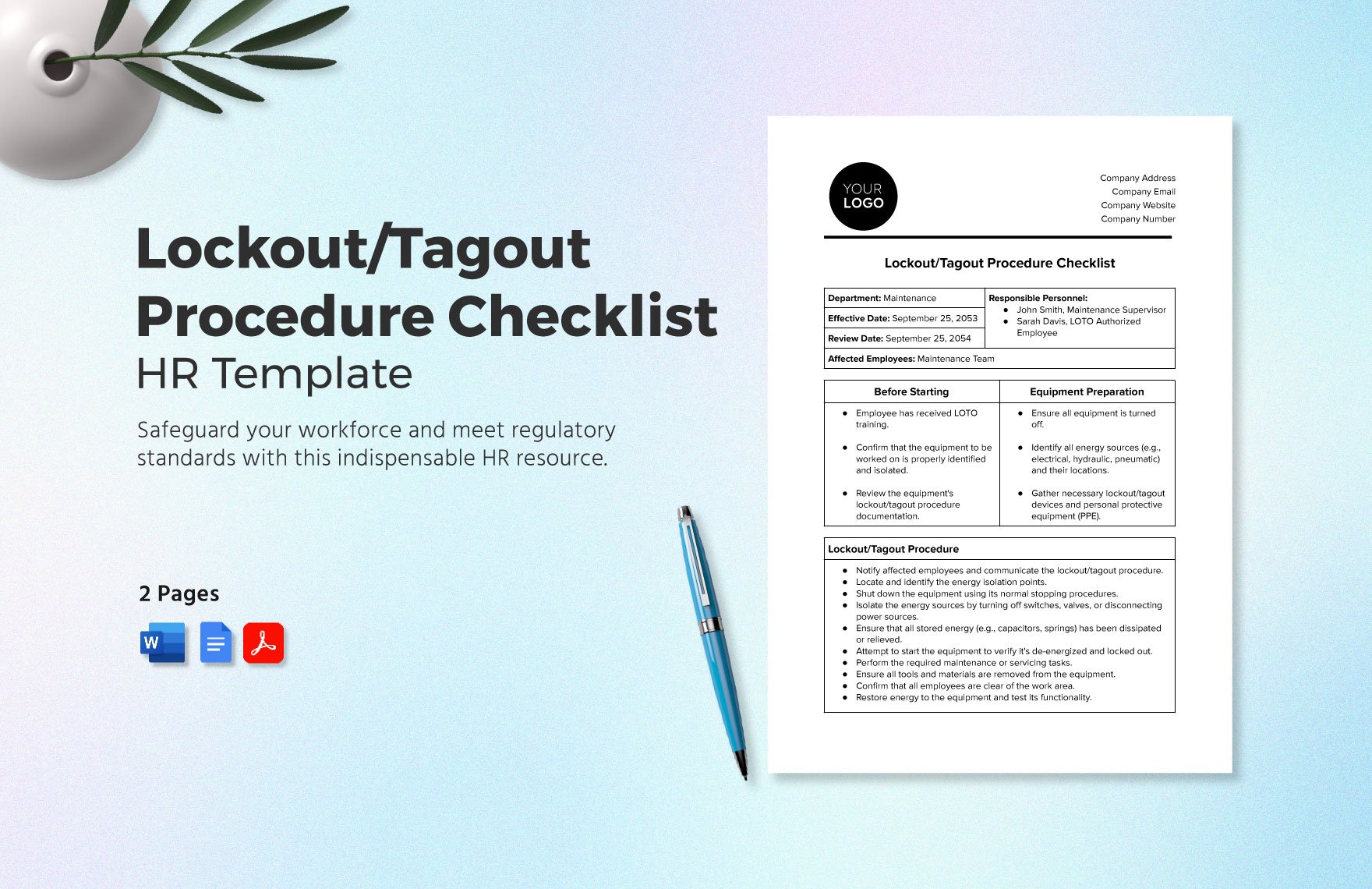
A LOTO procedures PDF isn’t a generic checklist downloaded from a random site. It’s a site-specific, equipment-level document that guides workers step-by-step through the energy isolation process. Here’s what must be inside:
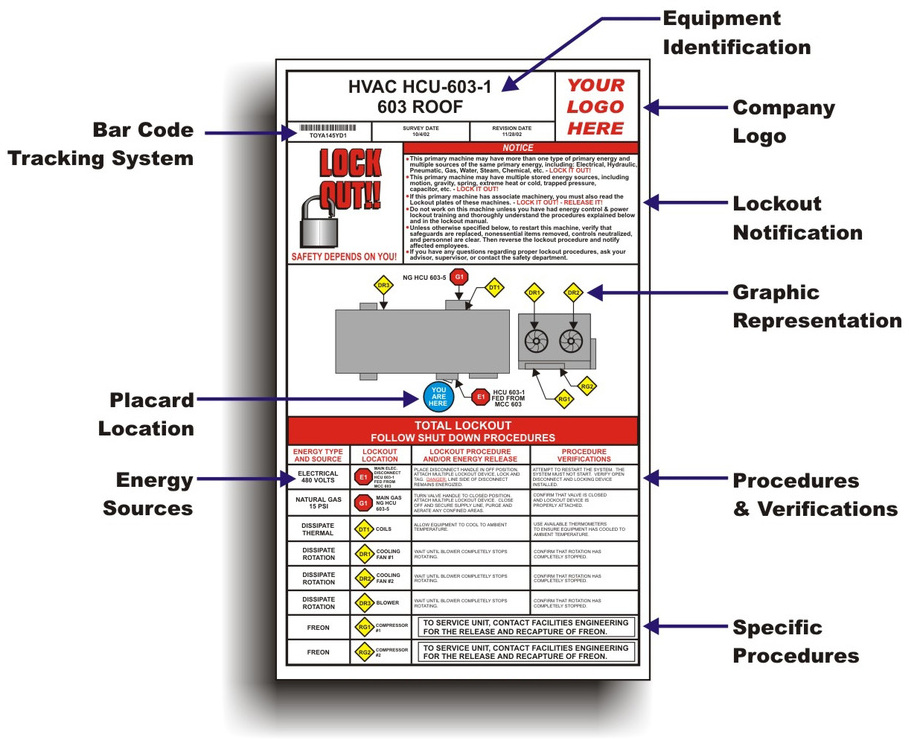
1. Equipment Identification Each procedure should start with precise identification: machine name, model, location, and unique ID number. Ambiguity kills. “Conveyor Line B” is not enough. “Conveyor Line B – Packaging Room, Station 7, Model X22-J” is.
2. Energy Sources List Detail every potential energy source: electrical, hydraulic, pneumatic, mechanical, thermal, chemical. For example, a press brake may have: - 480V electrical supply - Hydraulic accumulators under pressure - Spring-loaded mechanisms
Each must be addressed in the procedure.
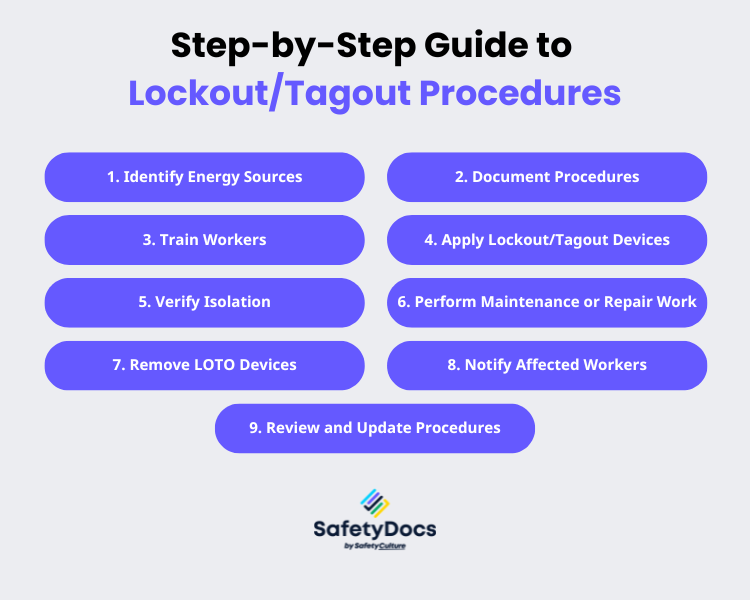
3. Step-by-Step Isolation Steps
- This is the core. Use numbered, sequential instructions:
- Shut down the machine using the emergency stop button.
- Open disconnect switch and verify off position.
- Release residual pressure from hydraulic lines via bleed valve.
- Install lockout device on main power disconnect.
- Apply personal lock and tag with employee name, date, and reason.
Clarity is key. Use active voice and avoid vague terms like “secure the system.”
4. Verification of Isolation Never assume. Include a verification step: “Test operating controls to confirm zero energy state. Verify no movement, sound, or pressure buildup.”
5. Group Lockout Instructions For team maintenance, define the role of the authorized coordinator. Include: - Use of a group lockout box - Each technician applies their personal lock - Coordinator verifies all safeguards before re-energization
6. Release and Re-energization Steps Equally critical. Outline:
- Confirmation that all tools are removed
- All personnel are clear of the area
- Removal of locks only by the original installer
- Gradual re-energization and functional test
Common Mistakes in LOTO PDFs That Undermine Safety
Even compliant-looking documents fail when they ignore real-world conditions. Watch for these pitfalls:
1. One-size-fits-all templates Using the same LOTO procedure for multiple equipment types ignores unique hazards. A CNC mill and a boiler have different energy profiles—your PDF should reflect that.
2. Over-reliance on jargon Phrases like “de-energize primary feed” confuse frontline workers. Replace with “turn off main breaker labeled PB-3.”
3. Missing visual aids A diagram showing lock placement, valve positions, or energy isolation points improves comprehension. A PDF without visuals is half-baked.
| 4. No revision history or approval log LOTO procedures must be reviewed annually. Include a revision table: | |||
|---|---|---|---|
| ------ | --------- | ----------- | -------------- |
| 03/15 | 2.1 | J. Smith | Added pneumatic release step |
Without this, your document has no accountability trail.
5. Stored offline or on a single desktop If your LOTO PDF is locked in a folder on a supervisor’s laptop, it’s useless during an outage. Host it on a shared drive, intranet, or print laminated copies near equipment.
How to Create a Custom LOTO Procedures PDF (Step-by-Step)
You can’t just download and deploy. Real safety requires customization.
Step 1: Conduct an Energy Control Audit Walk through each machine with maintenance leads and safety officers. Identify: - All energy sources - Isolation points (disconnects, valves, bleeders) - Stored energy risks
Document findings with photos and diagrams.
Step 2: Draft Equipment-Specific Procedures Use a consistent template for all machines. Stick to the same format—headers, numbering, icons—so workers know what to expect.
Step 3: Involve the Workforce Have authorized employees review and test the procedure. Their feedback reveals flaws you can’t see from an office desk. One plant revised its lathe LOTO after a technician pointed out a hidden hydraulic line behind the access panel.
Step 4: Format for Readability Use:
- Bold headers
- Bulleted or numbered steps
- Red boxes for warnings (e.g., “Danger: Capacitors retain charge for 10 minutes after power-off”)
- Icons for lock placement, tag locations, verification steps
Step 5: Convert to PDF and Distribute Export from Word or Google Docs as a secured PDF to prevent unauthorized edits. Distribute: - Digital copies to maintenance teams - Printed versions at equipment stations - Upload to safety management software
Always include a “Last Reviewed” date on the footer.
Top 5 Sources for Reliable Lockout Tagout Procedures PDF Templates
Not all templates are created equal. These five deliver practical, OSHA-aligned frameworks you can adapt:
| Source | Key Features | Best For |
|---|---|---|
| OSHA.gov | Official LOTO standard (29 CFR 1910.147), sample procedures | Regulatory accuracy, legal defense |
| NIOSH | Research-backed templates, hazard-specific guides | High-risk industries (chemical, manufacturing) |
| SafetyCenter Inc. | Fully editable PDFs, multilingual support | Facilities with non-English speaking workers |
| Creative Safety Supply | Visual-heavy templates, diagram libraries | Teams needing quick comprehension |
| Grainger | Free downloadable LOTO kits (PDF + Excel) | Small operations on a budget |
Pro Tip: Avoid random blog sites offering “free LOTO PDF downloads.” Many are outdated or missing key compliance elements. Stick to .gov domains or established safety suppliers.
When a PDF Isn’t Enough: Integrating LOTO Into Daily Workflow
A flawless LOTO procedures PDF fails if it sits unused. Make it operational.
Use It in Training During onboarding, walk new hires through the PDF for the machines they’ll operate. Have them simulate lock application and verification.
Conduct Drills Quarterly, run surprise LOTO drills. Pick a machine, trigger a mock maintenance event, and evaluate compliance. One food processing plant cut LOTO errors by 70% within six months using this method.
Link to Permit Systems Integrate your LOTO PDFs into work permit software. Before a technician can approve a maintenance ticket, they must confirm LOTO steps were reviewed.
Audit with the Document in Hand During safety audits, carry printed copies. Watch a worker perform LOTO and mark discrepancies directly on the PDF.
This turns static documents into living tools.
Real-World Case: How a LOTO PDF Prevented a Fatal Accident
At a Midwestern steel mill, a technician prepared to service a roller conveyor. He followed the site’s LOTO procedures PDF, which included a rarely used step: “Inspect secondary drive coupling for residual torsion.”
He noticed slight movement despite power-off. Further investigation revealed a faulty brake on a linked system was transferring rotational force. The lockout held, but without that one sentence in the PDF—added after a near-miss six months prior—the outcome could have been fatal.
This shows why your LOTO PDF must evolve. Every incident, near-miss, or equipment change should trigger a document review.
Making Your Lockout Tagout Procedures PDF Actionable Today
Your LOTO procedures PDF should be more than a compliance checkbox. It should be the backbone of your energy control program—clear, accessible, and alive with updates.
- Start now:
- Pull your current LOTO documents.
- Audit one high-risk machine using the checklist above.
- Redraft its procedure with photos, numbered steps, and verification points.
- Convert to PDF, share with your team, and run a live test.
Safety isn’t built in a day. But it can be reinforced every time someone opens the right PDF before touching a machine.
Don’t wait for an incident to prove the value of a well-written lockout tagout procedures PDF. The best time to improve yours was yesterday. The next best time is now.
Frequently Asked Questions
What should a lockout tagout procedures PDF include? It must list equipment details, energy sources, step-by-step isolation, verification methods, group lockout rules, and re-energization steps.
Are free LOTO PDF templates reliable? Only if from trusted sources like OSHA, NIOSH, or established safety suppliers. Avoid generic templates from unknown websites.
Can a LOTO PDF replace hands-on training? No. It supports training but cannot replace practical drills and supervised practice.
How often should LOTO procedures be updated? Annually at minimum, or immediately after equipment changes, incidents, or near-misses.
Who is responsible for creating LOTO procedures? The employer, typically with input from safety officers, maintenance leads, and authorized employees.
Should LOTO PDFs be available in multiple languages? Yes, if your workforce includes non-English speakers. Misunderstanding steps can lead to injury.
Can digital LOTO PDFs be used on mobile devices during maintenance? Yes, if they’re accessible offline and protected from unauthorized changes.
FAQ
What should you look for in Lockout Tagout Procedures PDF Guide for Workplace Safety? Focus on relevance, practical value, and how well the solution matches real user intent.
Is Lockout Tagout Procedures PDF Guide for Workplace Safety suitable for beginners? That depends on the workflow, but a clear step-by-step approach usually makes it easier to start.
How do you compare options around Lockout Tagout Procedures PDF Guide for Workplace Safety? Compare features, trust signals, limitations, pricing, and ease of implementation.
What mistakes should you avoid? Avoid generic choices, weak validation, and decisions based only on marketing claims.
What is the next best step? Shortlist the most relevant options, validate them quickly, and refine from real-world results.