Machines don’t warn you twice. One missed step during maintenance—a valve left open, a breaker not fully isolated—and the consequences can be catastrophic. Across manufacturing, utilities, and industrial facilities, improper energy control remains a leading cause of severe injuries. The solution isn’t just awareness—it’s a structured, repeatable lockout tagout procedures template that turns safety from intention into action.
A lockout tagout (LOTO) procedures template isn’t a generic form to fill out and file away. It’s a living document that guides teams through the exact steps to de-energize, isolate, verify, and secure machinery. When done right, it prevents unexpected start-ups, protects maintenance personnel, and meets OSHA 1910.147 compliance. When done poorly, it creates a false sense of security.
This guide delivers a field-tested lockout tagout procedures template with actionable structure, real-world examples, and integration tips—designed not just to check a compliance box, but to save lives.
Why Most Lockout Tagout Procedures Fail
Many companies use templates that are too vague or one-size-fits-all. “Turn off machine” isn’t a procedure—it’s a hope. Real failure points include:
- Ambiguous roles: Who applies locks? Who verifies isolation?
- Missing energy types: Only addressing electrical, not hydraulic, pneumatic, or gravitational.
- No verification step: Assuming shutdown equals zero energy.
- Poor documentation: Handwritten notes, no version control, or missing diagrams.
A strong LOTO template eliminates guesswork. It answers: What machine? What energies? Who does what? How do we confirm it’s safe?
Core Components of a Usable Lockout Tagout Procedures Template
Your template should be machine-specific, repeatable, and clear enough for any qualified employee to follow without supervision. Here are the non-negotiable elements:
#### 1. Equipment Identification Include: - Machine name and ID number - Location (plant, floor, line) - Primary and secondary energy sources (electrical, hydraulic, steam, etc.)
Example: Hydraulic Press #7 (Line B, South Plant) – powered by 480V electrical supply and 2,500 PSI hydraulic system.
#### 2. Authorized Personnel List Name roles, not people: - Primary LOTO executor - Backup verifier - Operations lead who authorizes downtime
This avoids confusion during shift changes.
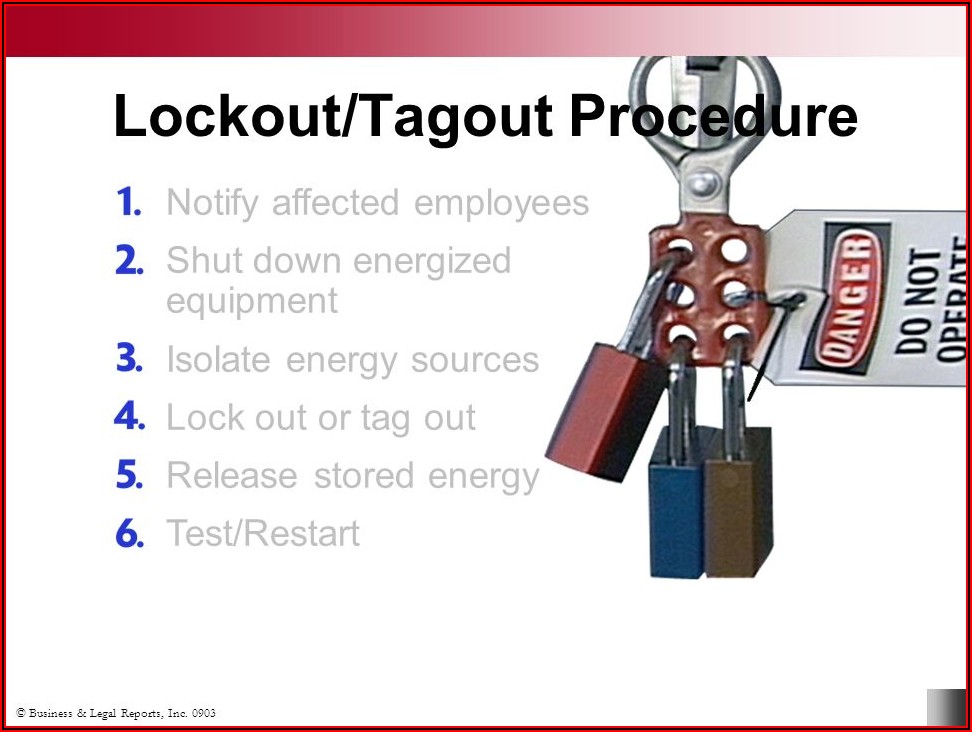
- #### 3. Step-by-Step Shutdown Sequence Break down shutdown into numbered actions:
- Notify operations team of planned maintenance.
- Bring machine to normal stop using control panel.
- Open disconnect switch at main power source.
- Close hydraulic isolation valve and relieve line pressure.
- Depressurize pneumatic accumulators via bleed valve.
Each step must specify how and where.
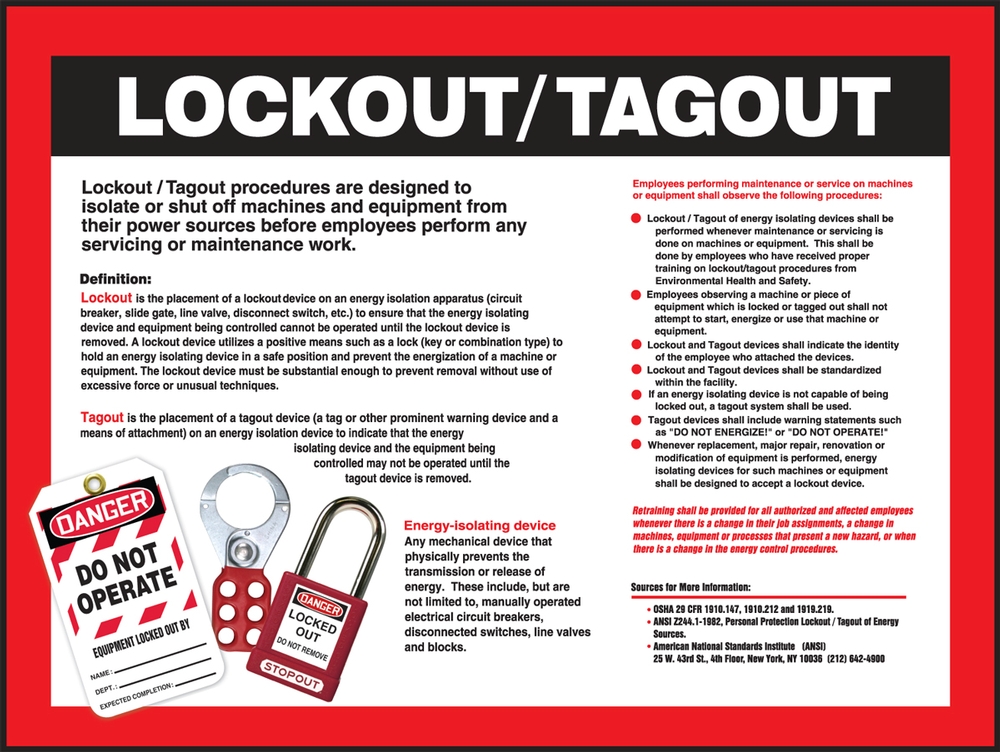
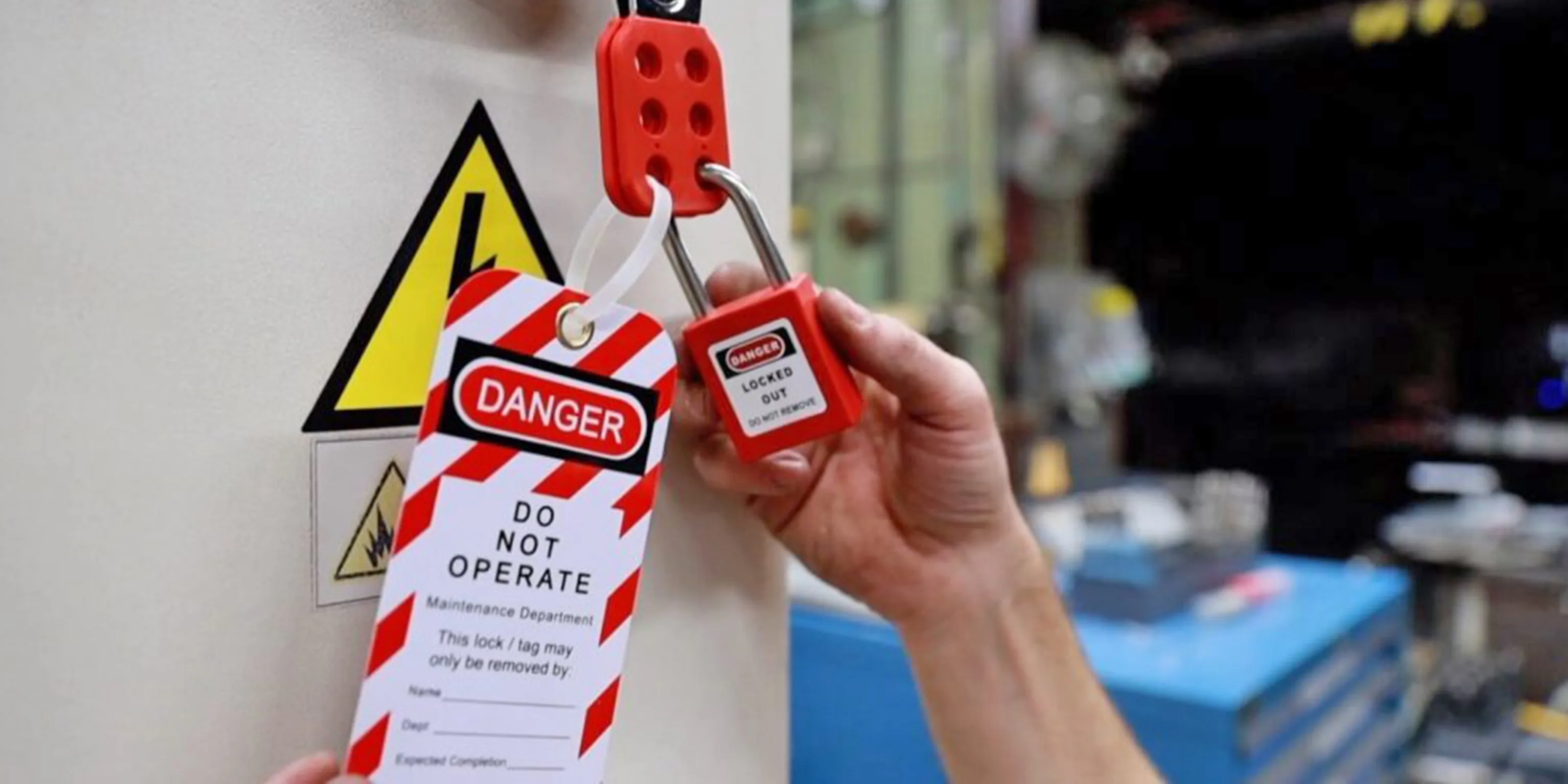
#### 4. Lock Application Points List physical lock locations: - Circuit breaker lockout hasp - Hydraulic valve lockout clamp - Pneumatic isolation valve cap
Include photos or diagrams if possible.
#### 5. Verification of Zero Energy This is where most templates fail. Include: - Use of voltage tester on circuit points - Pressure gauge check on hydraulic lines - Visual confirmation of disengaged couplings
Pro Tip: Require two-person verification for high-risk systems. One applies locks, the other confirms zero energy.
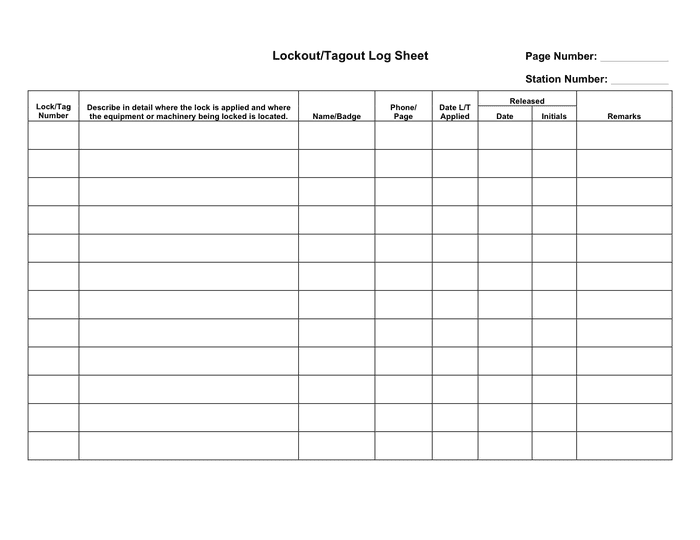
#### 6. Tagout Details Each lock must have a tag with: - Name of authorized employee - Date and time applied - Reason for lockout - Contact info
Tags must be standardized, non-reusable, and legible.
#### 7. Restoration Procedure Just as critical as shutdown. Include: - Confirm all tools removed - Notify operations team - Remove locks only by original installer - Gradual re-energizing with monitoring
No shortcuts. No exceptions.
Real-World Template Example: Conveyor System LOTO
Here’s how a completed section of a lockout tagout procedures template might look:
Equipment: Main Assembly Conveyor (System ID: CON-205) Location: Production Floor, Zone 3 Energy Sources: - 208V AC motor (Circuit CB-8) - Pneumatic guide arms (Line P-12) - Gravity feed from overhead bin
Authorized Personnel: - Maintenance Technician (LOTO Lead) - Senior Engineering Associate (Verifier)
- Shutdown Steps:
- Signal “Maintenance in Progress” via floor alert system.
- Stop conveyor via E-stop at Control Panel CP-3.
- Open motor disconnect switch at Panel B.
- Close air isolation valve on P-12 and bleed via test port.
- Lockout motor disconnect with hasp and personal lock.
- Lockout air valve using pneumatic lock clamp.
- Test for zero energy:
- - Verify 0V at motor terminals with multimeter.
- - Confirm 0 PSI on pneumatic gauge.
- - Visually inspect feed path is clear.
- Attach tag to each lock with name, time, and purpose.
- Restoration:
- Confirm all personnel clear of conveyor path.
- Remove tools and obstructions.
- Notify shift supervisor.
- Remove locks in reverse order.
- Re-energize motor and test pneumatic function at 50% power.
This level of detail prevents missteps during high-distraction environments.
Common Mistakes That Undermine LOTO Effectiveness
Even with a solid template, execution failures happen. Watch for these:
- Group lockout confusion: Multiple workers on one machine should use a group lockbox. Each applies their lock; the box holds the single key to re-energize. Never share locks.
- Tag reliance over lock use: Tags alone don’t physically prevent startup. Locks must isolate energy.
- Skipping verification: “I saw the switch off” isn’t enough. Always test.
- Using master keys: Defeats the purpose. Only the installer removes their lock.
- Poor training retention: Annual refreshers aren’t optional. Use shadow drills.
A template only works if the culture enforces it.
Integrating Your LOTO Template Into Daily Operations
A document on a server won’t stop an injury. Here’s how to make it part of the workflow:
#### Digital Access Store templates in a centralized system accessible from floor tablets. QR codes on machines can link directly to the correct LOTO procedure.
#### Visual Aids Post laminated summary sheets near isolation points. Include: - Lock locations - Energy sources - Emergency contacts
- #### Audit Ready Update templates whenever equipment changes. Include revision date and approval signature. OSHA will ask for six elements:
- Energy control procedure
- Employee training records
- Periodic inspections (annual)
- Machine-specific documentation
- Authorized vs. affected employee distinction
- Written program
Your template is the backbone of this audit trail.
5 Tools to Support LOTO Template Implementation
While the template is foundational, these tools improve adoption and compliance:
| Tool | Purpose | Key Benefit |
|---|---|---|
| BradyLockOut App | Digital LOTO procedures | Real-time access, audit logs, GPS verification |
| Seton LOTOStation | Wall-mounted kiosks | Centralized lock/tag storage with procedure access |
| Grace LOTO Manager | Cloud-based LOTO software | Workflow tracking, compliance reporting |
| Master Lock eCLSS | Electronic lockout system | RFID locks, remote monitoring, no physical keys |
| J.J. Keller LOTO Training Suite | Training + templates | OSHA-aligned materials and certification |
Choose based on scale. Small shops may thrive with printed templates and lock stations. Larger operations benefit from digital tracking to manage hundreds of procedures.
Customization: Adapting the Template for Your Industry
One template doesn’t fit all. Adjust based on risk profile:
- Manufacturing: Focus on production line stoppages, robotic cells, and conveyor systems. Include changeover LOTOs.
- Utilities: Address high-voltage switchgear, confined spaces, and pipeline isolation. Use double-block-and-bleed methods.
- Healthcare: Medical equipment like MRI machines have cryogenic and magnetic energy—include quench procedures.
- Food Processing: Combine LOTO with sanitation schedules. Lockout before wash-down.
Always conduct an energy audit before finalizing a template. Walk the machine. Identify every potential release point.
Final Step: Turn Template Into Habit
A lockout tagout procedures template is only as strong as the discipline behind it. Post it. Practice it. Audit it. Revise it.
Start by selecting three high-risk machines and building full templates. Train your team using those as models. Run surprise drills—can they follow the steps cold?
Make lockout tagout part of your site’s rhythm, not a special event.
When the press stops, the conveyor halts, and the valve closes—what happens next shouldn’t be up for debate. With the right template, it’s clear, controlled, and safe. Every time.
FAQ
What should you look for in Lockout Tagout Procedures Template That Actually Works? Focus on relevance, practical value, and how well the solution matches real user intent.
Is Lockout Tagout Procedures Template That Actually Works suitable for beginners? That depends on the workflow, but a clear step-by-step approach usually makes it easier to start.
How do you compare options around Lockout Tagout Procedures Template That Actually Works? Compare features, trust signals, limitations, pricing, and ease of implementation.
What mistakes should you avoid? Avoid generic choices, weak validation, and decisions based only on marketing claims.
What is the next best step? Shortlist the most relevant options, validate them quickly, and refine from real-world results.