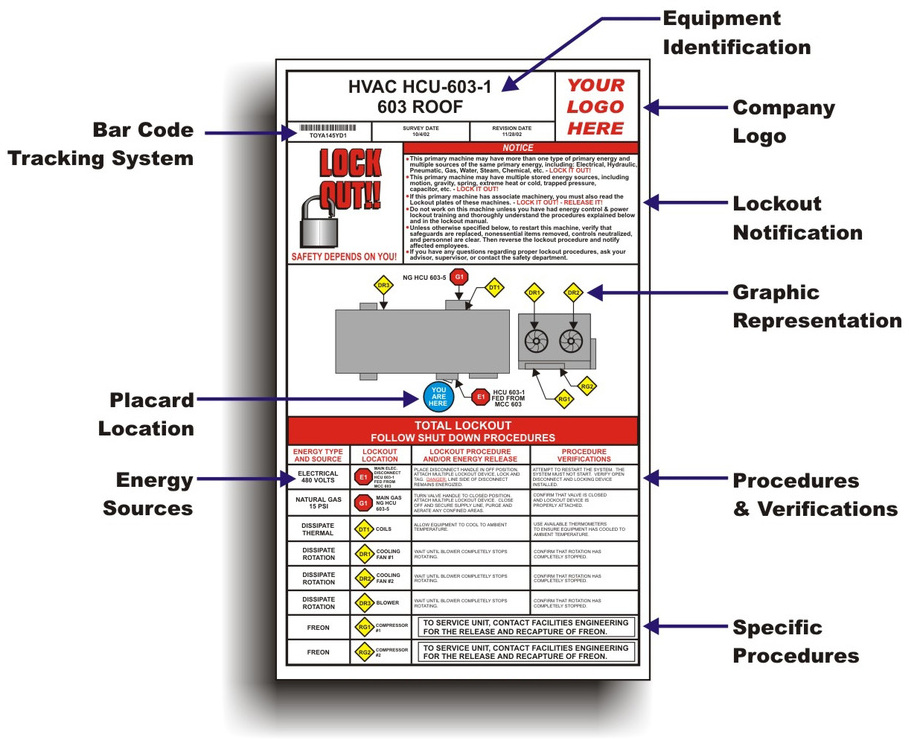
Every year, workers suffer severe injuries—or worse—because machinery activates unexpectedly during maintenance. The root cause? A missing or misapplied lockout tagout safety procedure. This isn’t a rare edge case. According to OSHA, nearly 10% of all serious accidents in manufacturing involve unexpected energization of equipment. Lockout tagout (LOTO) isn’t just a compliance checkbox—it’s a frontline defense against life-altering incidents.
When done correctly, LOTO procedures isolate energy sources, ensure machines stay off during servicing, and clearly communicate who is responsible for the control of hazardous energy. Yet too many organizations treat it as a formality, relying on outdated processes, incomplete training, or verbal agreements that vanish when shift changes occur.
This article breaks down the core components of effective lockout tagout safety procedures—grounded in OSHA standards, real-world execution, and operational discipline.
Why Lockout Tagout Procedures Are Non-Negotiable
Hazardous energy sources—electrical, hydraulic, pneumatic, mechanical, thermal, or chemical—don’t shut off because someone walks away from a machine. Residual pressure, stored energy in springs, or even gravity can trigger catastrophic movement.
Consider a maintenance technician servicing a conveyor system. If the circuit breaker is flipped off but not locked out, another worker might restore power, believing the line is idle. The sudden restart can result in amputations, crushing injuries, or fatalities.
LOTO procedures exist to eliminate this risk by:
- Physically isolating energy sources
- Applying locks and tags to prevent unauthorized re-energization
- Verifying zero energy before work begins
OSHA’s 29 CFR 1910.147 standard mandates these practices across general industry. Ignoring them doesn’t just risk human lives—it opens companies to fines exceeding $150,000 per violation in cases of willful noncompliance.
The 6-Step Lockout Tagout Process (With Real Examples)
A successful LOTO program follows a structured, repeatable sequence. Here’s the industry-standard six-step process—with practical context.
1. Prepare for Shutdown
Before touching any equipment, authorized employees must identify all energy sources. This includes not just the primary power (e.g., electrical panel), but secondary sources like capacitors, elevated loads, or pressurized lines.
Example: A mechanic servicing a hydraulic press must know that residual pressure in accumulators can release with deadly force, even after the pump is off. Reviewing the machine’s energy control plan is essential.
2. Notify Affected Personnel
Communication prevents confusion. Workers operating or nearby the machine must be informed that servicing is about to begin and the equipment will be unavailable.
Common Mistake: Skipping this step during night shifts, assuming “no one’s around.” In reality, janitorial staff or contractors may unknowingly interact with equipment.
3. Shut Down the Machine
Use normal stopping procedures—buttons, switches, valves—never emergency stops, which may not disconnect power.
Tip: Shut down in reverse operating order. For a packaging line, stop the outfeed first, then the sealing unit, then the infeed.
4. Isolate Energy Sources
This is the core of lockout. Disconnect every energy source using approved methods:

- Electrical: Circuit breaker locks
- Pneumatic: Bleed and valve lockout
- Hydraulic: Lock valves and relieve pressure
- Mechanical: Block belts, secure flywheels
Real Use Case: At a food processing plant, technicians use padlocks on disconnect switches and attach tags specifying the worker’s name, department, and expected return time.
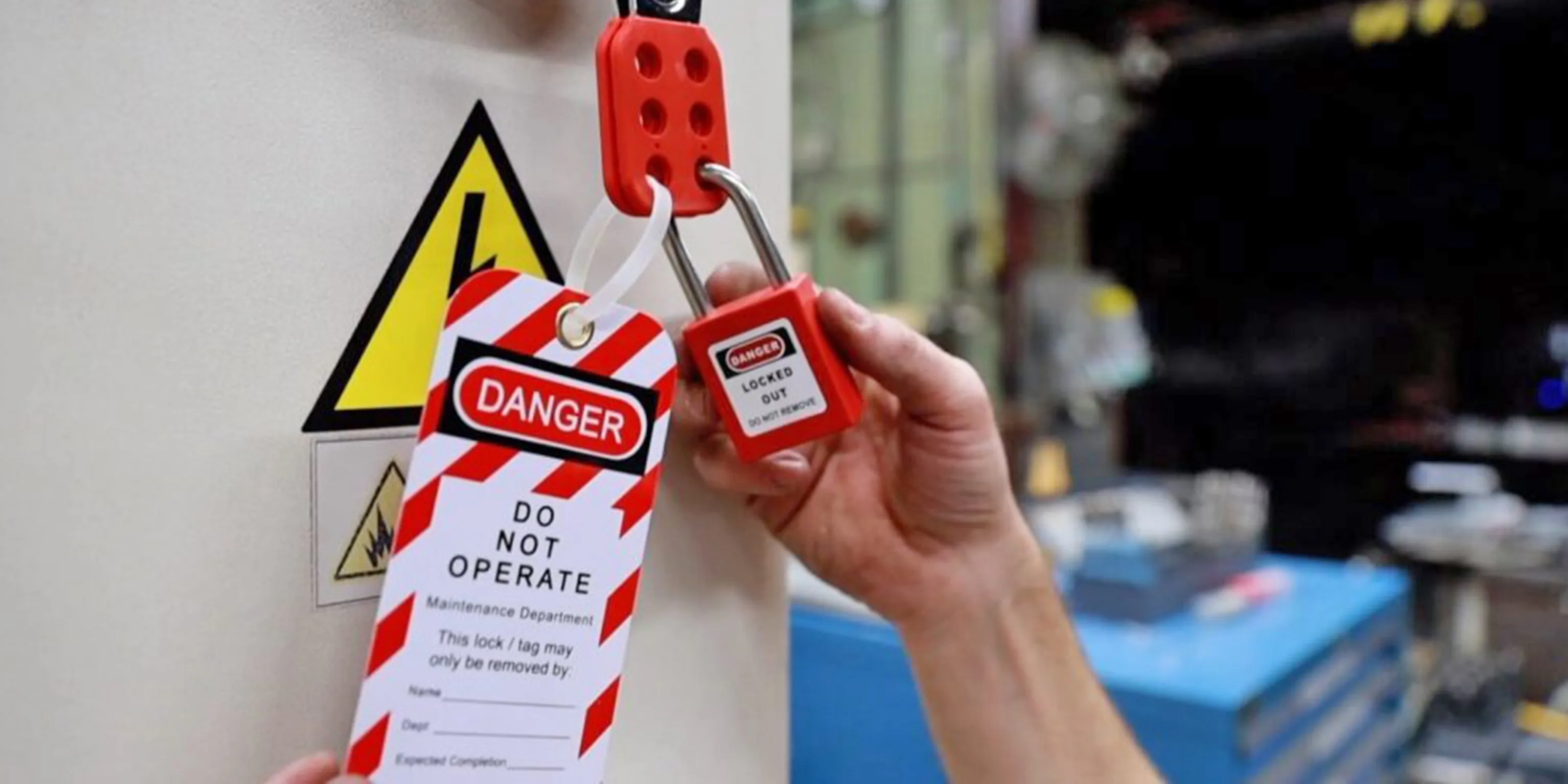
5. Apply Locks and Tags
Each authorized employee applies their own lock and tag. Group lockout boxes are used when multiple people work on one machine.
What the tag must include: - Name of the person locking out - Date and time - Reason for lockout - Department/shift
Tags are warnings. Locks are physical barriers. Both are required.
6. Verify Zero Energy
This is not optional. After lockout, test the system by trying to start it (using start controls). Then check for stored energy—bleed lines, discharge capacitors, lower suspended parts.
Pro Tip: Always re-verify after any break. A colleague may have removed a lock believing work is complete.
Common LOTO Failures (And How to Fix Them)
Even facilities with formal LOTO programs make critical errors. Awareness of these failures is the first step to prevention.
| Failure | Consequence | Solution |
|---|---|---|
| Using one lock for multiple energy sources | Incomplete isolation | Lock each source individually |
| Allowing "buddy locking" (one person locks for others) | Accountability gaps | Each worker applies their own lock |
| Failing to verify zero energy | Assumption of safety | Always test controls and check for residual energy |
| Incomplete documentation | OSHA violations, inconsistent execution | Maintain up-to-date energy control procedures |
| Poor tag quality | Illegible or missing info | Use durable, weather-resistant tags with clear fields |
One manufacturing site reduced LOTO incidents by 73% simply by introducing daily audits and replacing flimsy paper tags with laminated, pre-filled templates.
Who Is Responsible? Roles in LOTO Safety
Clear roles prevent confusion and reinforce accountability.
Authorized Employee
- Trained to perform LOTO
- Applies and removes their own lock
- Verifies zero energy
Affected Employee
- Operates or uses the equipment
- Must understand LOTO purpose
- Cannot perform maintenance but must respect locks
Supervisor
- Ensures procedures are followed
- Oversees training and compliance
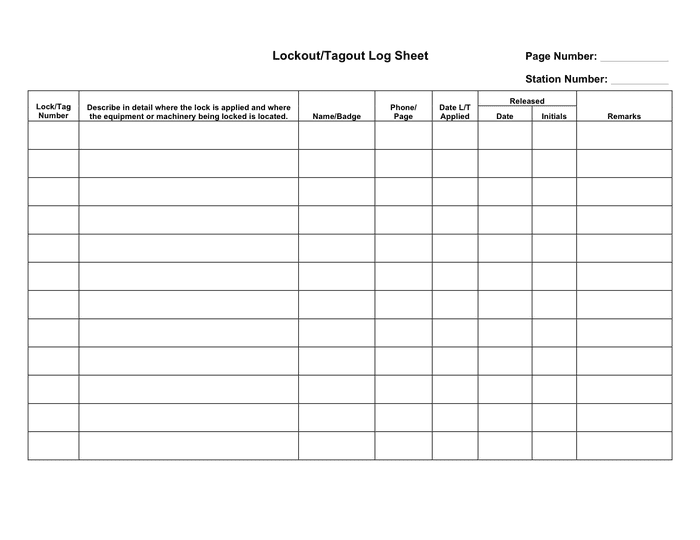
- Reviews lockout logs and audits
Mixing these roles is dangerous. An operator shouldn’t be expected to lock out a machine unless formally trained and designated as authorized.
Machine-Specific LOTO Procedures: One Size Doesn’t Fit All
A CNC mill requires different isolation steps than a boiler or forklift. Effective LOTO programs include detailed, equipment-specific procedures.
- Example: Lockout for a Punch Press
- Shut down via control panel
- Isolate main electrical disconnect with hasp and lock
- Engage flywheel brake and secure with mechanical lock
- Close and lock hydraulic valve; bleed line pressure
- Attach personal lock and tag
- Test start button and check for movement
These procedures should be: - Posted near the machine - Reviewed annually - Updated after equipment modifications
Generic LOTO checklists are a start—but they’re not enough. Customization is critical.
Training and Compliance: Building a Culture of Safety
OSHA requires retraining every 12 months or after procedural changes. But compliance training isn’t the same as competency.
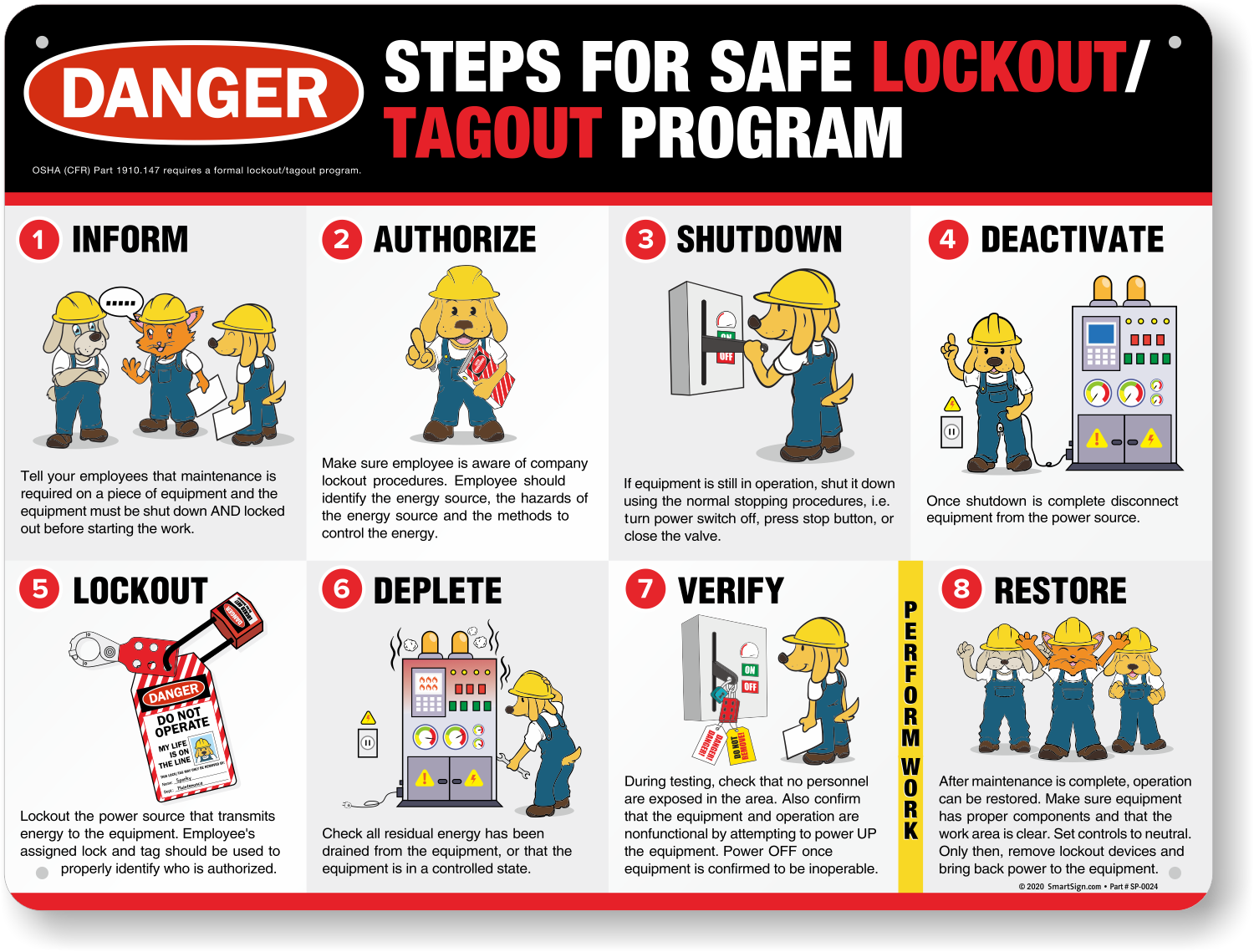
Effective LOTO training should include: - Hands-on practice with real locks, tags, and hasps - Walkthroughs of specific machines - Scenario-based drills (e.g., “What if a lock is missing?”) - Clear consequences for bypassing procedures
Reality Check: At one facility, workers admitted to using tape to cover start buttons instead of proper lockout. Why? “It’s faster.” This kind of behavior reveals a cultural failure, not a knowledge gap.
Leadership must model LOTO adherence. When managers rush maintenance or skip steps, the message is clear: safety is optional.
Tools and Devices That Support LOTO Success
While procedures are foundational, the right tools make compliance easier and more reliable.
| Tool | Purpose | Real-World Use |
|---|---|---|
| Hasp Lockouts | Allows multiple locks on one disconnect | Team maintenance on a production line |
| Valve Lockouts | Secures open/closed positions | Chemical plant isolating piped gas |
| Cable Locks | For large or irregular disconnects | Wind turbine maintenance |
| Group Lockout Boxes | Centralizes control for multi-person work | Boiler repair with 5 technicians |
| Tag Printers | Produces durable, standardized tags | Automotive plant with 200+ machines |
Investing in quality lockout hardware reduces workarounds. A $15 cable lock preventing a $2M injury claim is a bargain.
Closing the Gap: From Paper to Practice
Having a LOTO program on file means nothing if it’s not lived every day. The difference between compliance and safety is execution.
Start by auditing three high-risk machines this week. Watch the lockout process from start to finish. Are all energy sources isolated? Are tags complete? Is zero energy verified?
Update procedures based on what you observe. Train crews on the changes. Repeat quarterly.
Lockout tagout safety procedures aren’t about avoiding fines—they’re about ensuring every worker goes home unharmed. That kind of outcome demands precision, discipline, and a refusal to cut corners.
Do it right, every time.
FAQ
What is the difference between lockout and tagout? Lockout uses physical devices (like padlocks) to prevent energy release. Tagout uses warning tags. OSHA allows tagout alone only if it provides equivalent protection—most high-risk scenarios require lockout.
Can a tag alone be used for machine isolation? Only in limited cases where lockout is not feasible. Tagout must include a robust procedure, additional safety measures, and employee training.
Who can remove a lockout device? Only the authorized employee who applied it. In their absence, a supervisor may remove it under strict protocols, including verification that the worker is not at the machine.
What counts as hazardous energy? Electrical, mechanical, hydraulic, pneumatic, chemical, thermal, and gravitational energy—all capable of causing injury if released unexpectedly.
How often should LOTO procedures be reviewed? Annually, or whenever equipment, processes, or isolation methods change.
Do LOTO procedures apply to corded tools? Yes, if they’re being serviced. The plug must be disconnected and locked out at the source, not just unplugged.
Is training required for all employees? Yes. Authorized employees need full LOTO training. Affected employees must understand the purpose and limitations of the program.
FAQ
What should you look for in Lockout Tagout Safety Procedures That Prevent Workplace Injuries? Focus on relevance, practical value, and how well the solution matches real user intent.
Is Lockout Tagout Safety Procedures That Prevent Workplace Injuries suitable for beginners? That depends on the workflow, but a clear step-by-step approach usually makes it easier to start.
How do you compare options around Lockout Tagout Safety Procedures That Prevent Workplace Injuries? Compare features, trust signals, limitations, pricing, and ease of implementation.
What mistakes should you avoid? Avoid generic choices, weak validation, and decisions based only on marketing claims.
What is the next best step? Shortlist the most relevant options, validate them quickly, and refine from real-world results.