Equipment doesn’t warn you before it starts. A conveyor belt, hydraulic press, or electrical panel can activate unexpectedly—especially during maintenance—and the consequences are often catastrophic. Across industries, failure to implement proper lockout tagout procedures leads to preventable injuries, fatalities, and regulatory penalties. The solution isn’t complex, but it must be systematic, enforced, and deeply understood.
Lockout tagout (LOTO) isn’t just a safety checklist. It’s a life-or-death protocol designed to isolate hazardous energy sources and keep workers safe during servicing or maintenance. When done correctly, LOTO prevents accidental startups, releases stored energy, and creates accountability. When done poorly, it becomes a tragic formality.
This guide breaks down proper lockout tagout procedures with real-world context—what works, where people fail, and how to build a system that holds up under pressure.
What Is Lockout Tagout and Why It Matters
Lockout tagout is a safety procedure used to ensure that dangerous machines and energy sources are properly shut off and cannot be restarted until maintenance or servicing is complete. "Lockout" refers to physically locking energy-isolating devices—like circuit breakers or valve closures—so they can’t be operated. "Tagout" involves placing a visible warning tag on the lock that identifies the worker, reason for isolation, and time of application.
The goal? Zero unexpected energization.
According to OSHA, compliance with LOTO standards prevents an estimated 120 fatalities and 50,000 injuries annually in the U.S. alone. These incidents don’t happen because workers are careless—they happen because procedures are unclear, inconsistently applied, or bypassed due to production pressure.
A chemical plant technician once lost three fingers when a colleague unknowingly re-energized a mixer she was cleaning. The lock was in place, but the tag was missing key details. Miscommunication, lack of training, and procedural shortcuts—this is where LOTO fails.
Proper LOTO isn’t optional. It’s enforced by OSHA 29 CFR 1910.147 and similar standards worldwide. Violations routinely result in six-figure fines. More importantly, they result in irreversible harm.
The 6 Core Steps of Proper Lockout Tagout Procedures
LOTO isn’t one action—it’s a sequence. Skipping a step, even if it seems minor, creates risk. Follow these six steps every time, without exception.
#### 1. Preparation: Identify Hazards and Energy Sources Before shutting anything down, assess the equipment. What energy sources power it? Electrical? Pneumatic? Hydraulic? Thermal? Gravitational? A forklift’s raised forks, for example, store gravitational energy. A boiler retains heat long after shutdown.
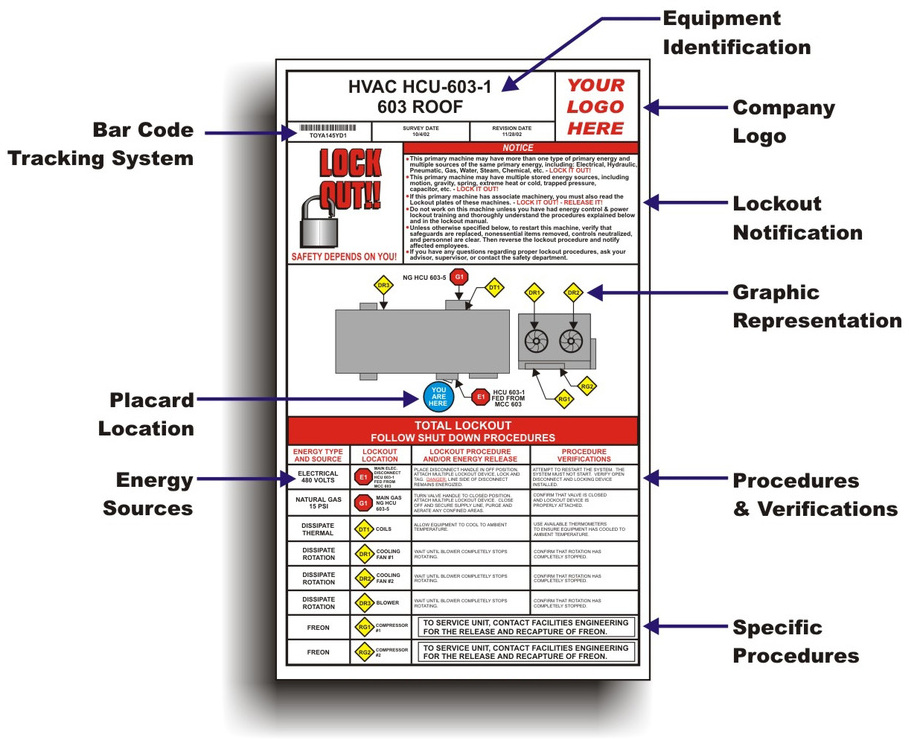
Create an energy control plan for each machine. Document all energy types, isolation points, and required lockout devices. This becomes your LOTO blueprint.
Common Mistake: Assuming all machines use only one energy source. A packaging machine might run on electricity but use compressed air to actuate clamps. Both must be locked out.
#### 2. Notification: Alert Affected Personnel Warn everyone who operates or works near the equipment. Use radios, signage, or direct communication. This prevents confusion and ensures no one tries to restart a machine unknowingly.
In one automotive plant, a mechanic began servicing a robotic arm. Unaware of the work, an operator hit the “cycle start” button from a remote station. The robot moved—fortunately, the mechanic escaped with minor bruises. Proper notification would have prevented this.
#### 3. Shutdown: Power Down Following Established Procedures Shut down the machine using normal stopping controls—buttons, switches, or emergency stops. Do not assume that hitting “off” removes energy. It doesn’t.
Always follow the manufacturer’s shutdown sequence. Some systems require gradual cooling or pressure release.

#### 4. Isolation: Lock and Tag Every Energy Source This is the heart of LOTO. Isolate each energy source using approved devices:
- Circuit lockouts for electrical panels
- Valve lockouts for fluid lines
- Plug lockouts for corded equipment
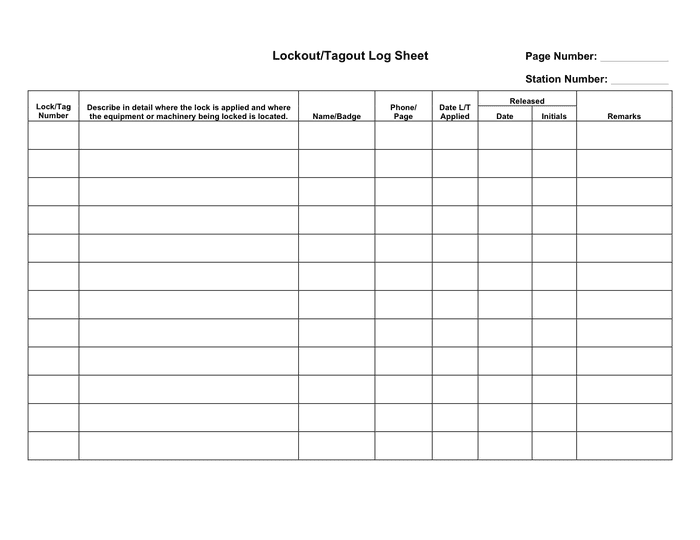
Apply your personal lock—never share keys. Attach a tag with your name, department, reason for lockout, and time. If multiple workers are involved, use a group lockout box where each person applies their own lock.
Pro Tip: Use standardized lockout hasps and color-coded locks by department. This improves visibility and accountability.
#### 5. Control Stored Energy: Bleed, Block, or Dissipate Residual energy kills. A capacitor can shock hours after power-off. Pressurized lines can rupture. Rotating parts can coast.
After isolation, safely release stored energy: - Bleed air or hydraulic pressure - Drain fluids - Ground electrical components - Block moving parts (e.g., lockout pins)
Verify energy dissipation with testing tools—never by hand.
#### 6. Verification: Confirm Zero Energy State Test the machine. Attempt to start it using normal controls. Nothing should happen. If it does, energy remains—go back and recheck isolation.
This step is non-negotiable. It’s the final proof that the system is safe.
Common LOTO Failures and How to Avoid Them
Even with procedures in place, real-world execution often falls short. Here are frequent breakdowns—and solutions.
#### Using Tags Without Locks Tagout alone is insufficient unless the employer proves tags provide equivalent protection to locks. In most cases, they don’t. Tags can be removed; locks physically prevent operation.
Fix: Always use lockout devices. Tags are supplements, not substitutes.
#### Group Lockout Confusion In team maintenance, only one person often applies locks while others rely on verbal assurance. This violates the “one person, one lock” rule.
Fix: Use a group lockout station. Each worker applies their own lock to a hasp. Only when all locks are removed can energy be restored.
#### Bypassing LOTO for “Quick Fixes” A 30-second adjustment? That’s how accidents happen. One refinery worker was killed resetting a valve in under a minute—no lockout used.
Fix: Enforce a zero-tolerance policy. If energy is present, LOTO applies—no exceptions.
#### Incomplete Energy Identification Overlooking a secondary energy source—like a backup battery or spring tension—leads to surprise activation.
Fix: Conduct equipment-specific energy audits. Update LOTO plans when machinery is modified.
Building a Sustainable LOTO Program
A one-time training session won’t cut it. Proper lockout tagout procedures require culture, consistency, and continuous improvement.
#### Train Everyone—Not Just Maintenance Staff Operators, supervisors, contractors—all must understand LOTO basics. Affected employees need awareness training; authorized employees (those performing servicing) need full certification.
Training should include: - Hands-on lockout drills - Equipment-specific scenarios - Refresher courses every 12 months
#### Conduct Regular Audits OSHA requires annual inspections of LOTO procedures. But don’t treat this as a box-ticking exercise. Use audits to observe real practices, interview workers, and identify gaps.
One manufacturing site reduced LOTO violations by 78% after switching from paperwork reviews to live audits with surprise equipment checks.
#### Use Visual Controls Post LOTO flowcharts near high-risk machines. Use color-coded lockout stations. Label isolation points clearly. Visual cues reduce errors, especially in fast-paced or multilingual environments.
Real-World LOTO Use Cases

#### Case 1: Conveyor System Maintenance A food processing plant schedules monthly cleaning of a high-speed conveyor. The procedure includes: - Shutting down via E-stop - Locking the main disconnect switch - Isolating the drive motor with a circuit breaker lock - Blocking rollers with mechanical stops - Verifying no movement after start attempts
Each technician applies their personal lock to a group hasp. Only after all work is complete and tools removed do they remove their locks.
#### Case 2: Boiler Servicing A facility technician inspects a steam boiler. Steps: - Shut down burner and fuel supply - Lock main gas valve and electrical disconnect - Tag out control panel - Release residual pressure via relief valves - Confirm zero pressure with gauge - Test start controls—no response
Only then does inspection begin. Stored thermal energy remains a hazard, so PPE and cooling periods are enforced.
Tools and Devices for Effective LOTO
Using the right equipment ensures reliability and compliance. Here are five essential LOTO tools:
| Tool | Purpose | Best Use Case |
|---|---|---|
| Lockout Hasps | Allows multiple locks on one isolation point | Group maintenance tasks |
| Circuit Breaker Locks | Prevents resetting of breakers | Electrical panels |
| Valve Lockout Devices | Secures open or closed valves | Piping systems with fluid/gas |
| Plug Lockouts | Secures electrical cords | Portable equipment |
| Group Lockout Stations | Centralizes control during team servicing | Complex machinery with multiple workers |
Invest in durable, standardized devices. Cheap or improvised solutions fail under stress.
The Human Factor: Culture Over Compliance
The best LOTO procedure in the world fails if workers feel pressured to skip steps. Production deadlines, understaffing, and normalization of deviance erode safety.
Leadership sets the tone. When supervisors rush maintenance or accept “quick fixes,” they signal that safety is secondary.
Conversely, when managers participate in audits, praise safety compliance, and enforce accountability, LOTO becomes embedded in daily operations.
One plant reduced energy-related incidents to zero over three years by: - Empowering workers to stop work for safety concerns - Recognizing safe behavior monthly - Integrating LOTO performance into supervisor evaluations
Safety isn’t a program. It’s a culture.
Proper lockout tagout procedures save lives. They’re not complicated, but they demand discipline, clarity, and consistency. Start by mapping every machine’s energy sources. Train everyone. Audit relentlessly. And never allow exceptions—no matter how small the task.
If you walk past a machine under maintenance without a lock and tag, stop. Ask questions. Intervene. That’s not overreach. That’s responsibility.
Implement LOTO not to pass an inspection, but to ensure every worker goes home unharmed.
FAQ
What is the difference between lockout and tagout? Lockout uses physical devices to prevent energy restoration; tagout uses warning tags. Lockout is required when feasible—tags alone are not sufficient for full protection.
Who is responsible for applying lockout devices? Only authorized employees—those trained and certified in energy control procedures—can apply or remove lockout devices.
Can someone else remove my lock? Only under strict procedures, such as shift changes or emergencies. Employers must have a documented process, including verification that the original worker is not at risk.
Do LOTO procedures apply to corded tools? Yes. Unplugging a tool isn’t enough. Use a plug lockout device to prevent reinsertion, and tag it with your information.
How often should LOTO procedures be reviewed? Annually, per OSHA. Additionally, review after equipment changes, incidents, or near-misses.
Is LOTO required for routine production tasks? Not always. Minor tool changes or normal operations that don’t require access to hazardous areas may be exempt—but only if they meet specific OSHA criteria.
Can electronic lockout systems replace physical locks? Not yet. While digital tracking systems exist, physical locks remain the standard. Electronic solutions may support—but not replace—mechanical isolation.
FAQ
What should you look for in Mastering Proper Lockout Tagout Procedures for Workplace Safety? Focus on relevance, practical value, and how well the solution matches real user intent.
Is Mastering Proper Lockout Tagout Procedures for Workplace Safety suitable for beginners? That depends on the workflow, but a clear step-by-step approach usually makes it easier to start.
How do you compare options around Mastering Proper Lockout Tagout Procedures for Workplace Safety? Compare features, trust signals, limitations, pricing, and ease of implementation.
What mistakes should you avoid? Avoid generic choices, weak validation, and decisions based only on marketing claims.
What is the next best step? Shortlist the most relevant options, validate them quickly, and refine from real-world results.