Machines don't warn you before they start. One moment, a press is idle. The next, a hydraulic surge or accidental restart turns it into a crushing hazard. This is why the purpose of lockout tagout isn’t just procedural—it’s existential. It exists to prevent catastrophic injury or death when workers service or maintain equipment.
Across industries—manufacturing, construction, utilities, healthcare—lockout tagout (LOTO) is the linchpin of energy control. It’s not merely about hanging a tag or applying a lock. It’s about systematically isolating hazardous energy sources and ensuring they stay isolated until maintenance is complete.
Too many facilities treat LOTO as a compliance checkbox. But when done right, it’s a culture of safety, a procedural backbone that protects people, preserves operations, and avoids costly regulatory penalties.
What Exactly Is Lockout Tagout?
Lockout tagout refers to a safety procedure used to ensure that dangerous machinery is properly shut off and cannot be restarted before maintenance or servicing is complete. The process involves two key actions:
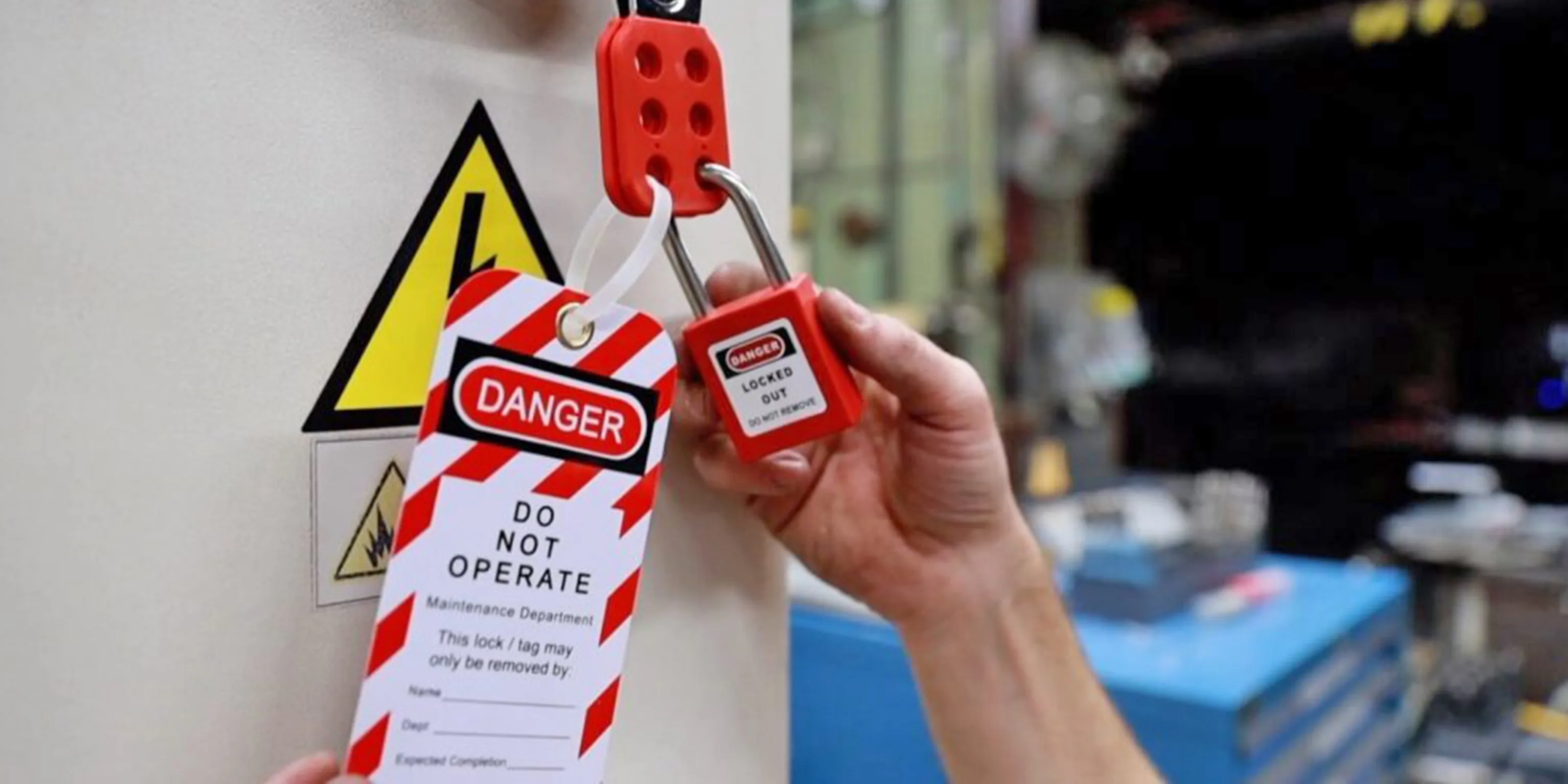
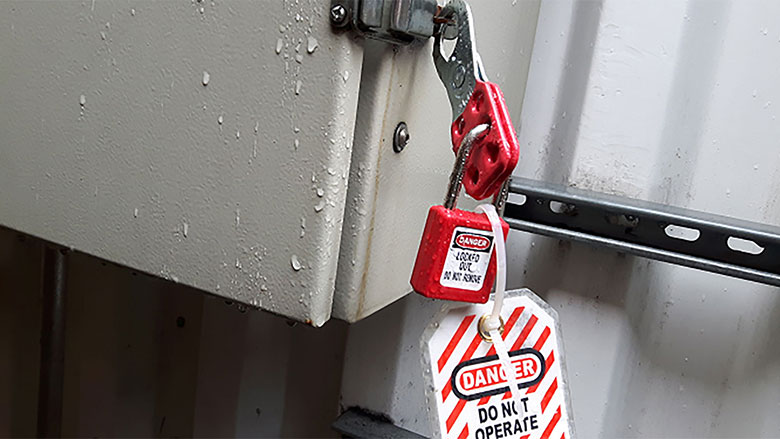
- Lockout: Physically securing an energy-isolating device (like a circuit breaker or valve) with a lock.
- Tagout: Attaching a warning tag to the lock or device, indicating that the equipment is not to be operated until the tag is removed.
While lockout provides physical restraint, tagout delivers communication. Together, they form a dual-layer defense against accidental energization.
Real-World LOTO Application
Imagine a technician tasked with clearing a jam in a conveyor system. Without LOTO, someone could flip a switch remotely, restarting the belt. The technician could be pulled into the mechanism in seconds. With LOTO, the power source is locked, a tag explains why, and only the technician holds the key. The system stays dead until the work is done.
This isn’t theoretical. According to OSHA, failure to control hazardous energy accounts for nearly 10% of serious accidents in manufacturing. LOTO isn’t just policy—it’s a proven intervention.
The Core Purpose of Lockout Tagout
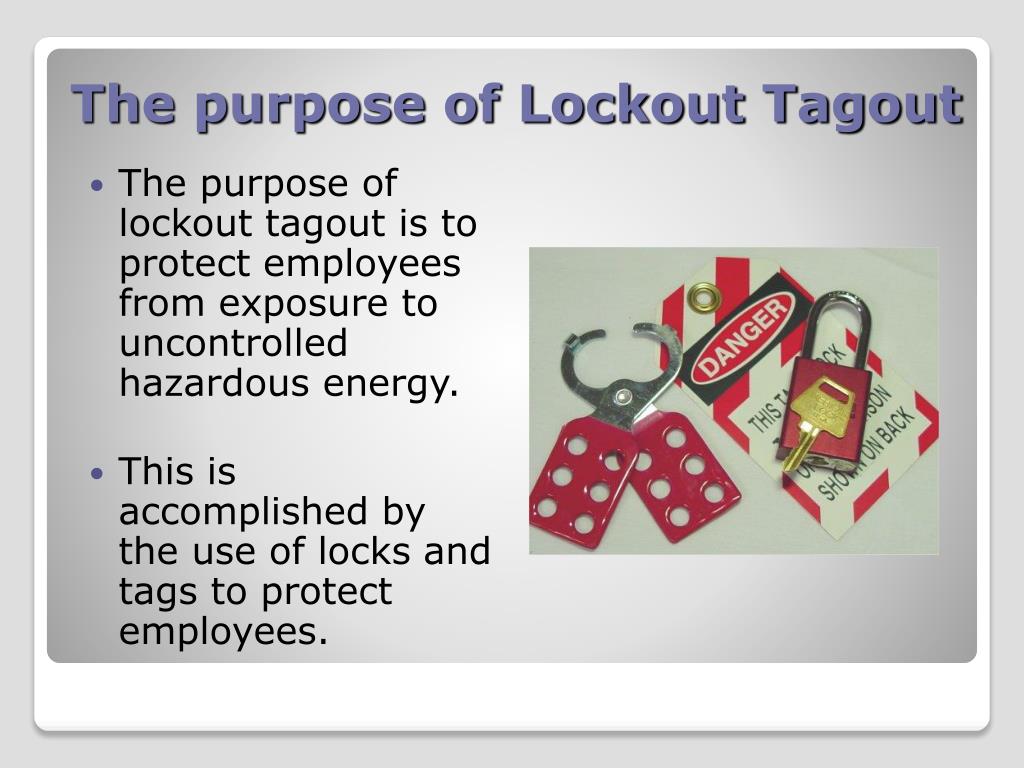
LOTO exists for one primary reason: to protect workers from unexpected energization, startup, or release of stored energy. But this simple objective branches into several critical functions.
1. Preventing Injuries and Fatalities
The most immediate purpose of LOTO is human protection. Equipment can store energy in many forms—electrical, mechanical, hydraulic, pneumatic, chemical, thermal. A spring under tension, a pressurized line, or a spinning flywheel can all cause harm even when the main power is off.
Example: In a 2022 incident at a metal fabrication plant, a worker was clearing debris from a shear machine. Though the machine appeared off, a colleague reset a breaker nearby. The machine cycled and severed the worker’s hand. An effective LOTO program would have physically locked the breaker and tagged it with the technician’s name and purpose.
2. Ensuring Compliance
with Safety Regulations
OSHA’s standard 29 CFR 1910.147 outlines specific requirements for controlling hazardous energy. Non-compliance isn’t just risky—it’s expensive. Fines can exceed $15,000 per violation, with willful or repeated offenses reaching $156,000.
But compliance isn’t the goal—protection is. The regulation exists because people get hurt. LOTO isn’t about passing an audit. It’s about making sure every worker goes home unharmed.
3. Creating Accountability and Clear Communication
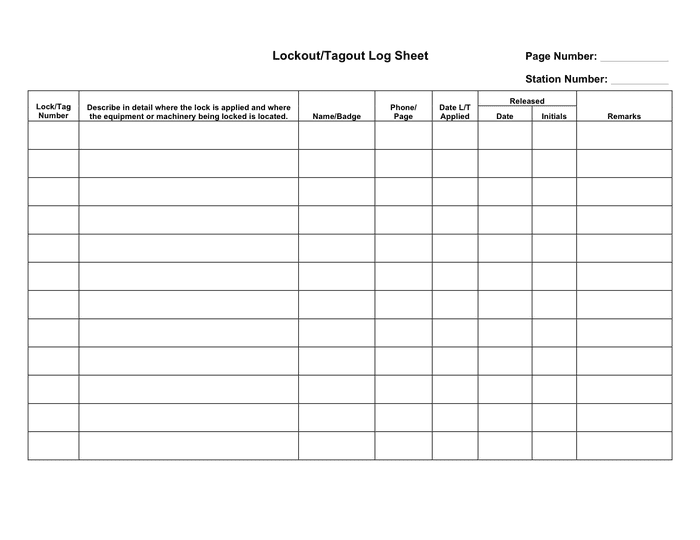
LOTO isn’t anonymous. Each lock is assigned to a specific individual, and each tag includes critical details: who applied it, why, and when. This eliminates confusion.
Common mistake: Using master locks or shared lockout devices. If multiple people are working on a machine, each must apply their own lock. A single lock with multiple keys defeats the purpose—what if one worker removes it prematurely?
This system of personal accountability ensures that no one restarts equipment without knowing exactly who is still at risk.
4. Standardizing Maintenance Procedures
LOTO forces organizations to document energy control procedures. This means mapping out every energy source, every isolation point, and every step required to make equipment safe.
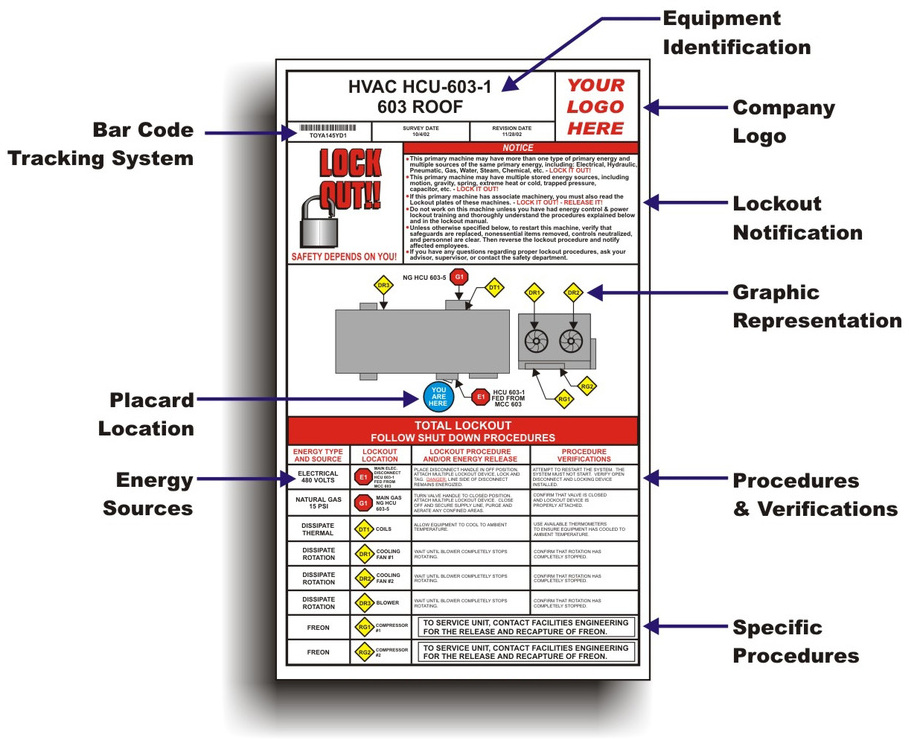
Workflow Tip: Create machine-specific LOTO checklists. For a CNC lathe, this might include: - Shutting off main power - Closing hydraulic valves - Bleeding pressure lines - Locking disconnect switch - Verifying zero energy with a test
Without standardization, workers rely on memory—especially dangerous during emergency repairs or shift changes.
How LOTO Protects Against Different Energy Types
One of the most overlooked aspects of LOTO is its scope. It’s not just about electricity. The purpose of lockout tagout extends to all forms of hazardous energy.
| Energy Type | Examples | LOTO Response |
|---|---|---|
| Electrical | Motors, control panels, circuits | Lock main disconnect, verify with tester |
| Mechanical | Springs, flywheels, belts | Block or release tension, lock in safe position |
| Hydraulic | Pressurized fluid lines, cylinders | Close and lock valves, bleed pressure |
| Pneumatic | Compressed air systems, actuators | Depressurize, lock supply valve |
| Chemical | Gas lines, reactive agents | Isolate with double block valves, vent |
| Thermal | Steam lines, heated surfaces | Cool down, isolate, tag |
Realistic Use Case: In a food processing plant, a mixing tank may be chemically inertized but still hold residual steam pressure. A worker opening the hatch without releasing thermal energy risks a scalding blast. Proper LOTO includes cooling, venting, and verifying temperature—steps often missed in rushed procedures.
Common LOTO Failures and How to Avoid Them
Even facilities with LOTO programs fail in practice. Here are the most frequent breakdowns—and how to fix them.
1. Incomplete Energy Isolation
Workers lock the main switch but ignore secondary sources like battery backups or pneumatic reservoirs.
Solution: Conduct a full energy audit for each machine. Identify all potential sources, not just the obvious ones.
2. Skipping Verification
Applying a lock isn’t enough. You must verify that zero energy exists.
Best Practice: Always test the machine after lockout. Try to start it (it shouldn’t). Use voltage testers, pressure gauges, or thermal sensors as needed.
3. Poor Tag Quality
Tags that are faded, generic, or missing information reduce effectiveness.
Fix: Use durable, standardized tags with fields for: - Employee name - Date and time - Reason for lockout - Department
4. Group Lockout Confusion
In team maintenance, multiple workers must each apply their own lock. A single “group lockbox” system ensures all must agree before restart.
Workflow Tip: Use a hasp on the energy isolator. Each worker adds their lock. Keys stay with them. Only when the last lock is removed can the machine be re-energized.
5. Temporary Removal of Locks
Sometimes work is paused. Locks must never be removed unless the worker returns and re-verifies conditions.
Policy Rule: If a worker leaves, their lock stays. Handoff requires formal retraining and re-authorization.
Industries Where LOTO Is Non-Negotiable
While OSHA mandates LOTO in general industry, its importance spans sectors with high-energy equipment.
Manufacturing Assembly lines, presses, and robotic systems all pose crushing, cutting, or entanglement risks. A single misstep during tool changes can be fatal.
Utilities Power plants and substations involve high-voltage systems. LOTO prevents arc flashes and electrocution during maintenance.
Healthcare MRI machines, sterilizers, and oxygen systems store energy. Service technicians need protection just like factory workers.
Construction Heavy equipment like cranes or excavators may require servicing. LOTO ensures hydraulic systems stay depressurized.
Agriculture Grain augers and balers can start unexpectedly. Lockout prevents amputations and entrapments during cleaning.
In each case, the purpose of lockout tagout remains consistent: eliminate the possibility of surprise activation.
Building an Effective LOTO Program
A good LOTO program isn’t a binder on a shelf. It’s a living system integrated into daily operations.
Key Components:
- Written procedures for each piece of equipment
- Employee training—authorized vs. affected workers
- Periodic inspections (at least annually)
- Lockout devices that are standardized and durable
- Clear accountability through individual locks and tags
Training Pitfall: Many companies train workers once and forget. But turnover, new equipment, and procedure changes demand refreshers. Schedule annual retraining—and document it.
Inspection Insight: During audits, watch the actual process. Does the worker verify isolation? Do they follow the written steps? Observation beats paperwork.
The Human Factor in LOTO Success
Technology and procedures mean nothing without culture. The purpose of lockout tagout is undermined when workers bypass it “to save time.”
- A maintenance tech skips lockout because “it’ll just take a minute.”
- A supervisor pressures staff to finish fast, ignoring safety steps.
- Workers see LOTO as obstruction, not protection.
Cultural Fix: Leadership must model compliance. Supervisors should never ask, “Why is the line down?” without first asking, “Is everyone locked out safely?”
Recognition helps too. Reward teams that follow LOTO perfectly for a quarter. Celebrate near-miss reporting. Build pride in safety.
Final Thoughts: LOTO Is More Than a Procedure
The purpose of lockout tagout isn’t just to meet OSHA standards. It’s to create a workplace where no one risks their life to fix a machine. It’s about respect—for the power of the equipment and the value of the person maintaining it.
Effective LOTO combines rigor, clarity, and culture. It turns abstract safety policies into tangible actions: a lock, a tag, a test, a verified zero.
Start by auditing your highest-risk machines. Document every energy source. Train every worker. Audit monthly, not annually. Make LOTO part of your operational rhythm.
Because when the system works, nothing happens. And that’s exactly the point.
Frequently Asked Questions
What is the main goal of lockout tagout? The main goal is to protect workers from unexpected energization or startup of machinery during maintenance by isolating all hazardous energy sources.
Who is responsible for applying lockout tagout? Authorized employees—those trained to service equipment—are responsible for applying their own locks and tags.
Can tagout be used without lockout? Yes, but only if the tagout system provides equivalent protection. OSHA allows tagout alone in limited cases, but lockout is preferred for physical security.
How often should LOTO procedures be reviewed? At a minimum, they should be inspected annually. They must also be updated when equipment changes or after an incident.
What qualifies as hazardous energy? Any form of energy that can cause injury: electrical, mechanical, hydraulic, pneumatic, chemical, thermal, or gravitational.
Do all employees need LOTO training? Affected employees (those who operate equipment) need basic training. Authorized employees (those who service it) require in-depth instruction.
Can multiple workers use the same lock? No. Each worker must apply their own lock. Shared locks compromise accountability and increase risk.
FAQ
What should you look for in The Purpose of Lockout Tagout in Workplace Safety? Focus on relevance, practical value, and how well the solution matches real user intent.
Is The Purpose of Lockout Tagout in Workplace Safety suitable for beginners? That depends on the workflow, but a clear step-by-step approach usually makes it easier to start.
How do you compare options around The Purpose of Lockout Tagout in Workplace Safety? Compare features, trust signals, limitations, pricing, and ease of implementation.
What mistakes should you avoid? Avoid generic choices, weak validation, and decisions based only on marketing claims.
What is the next best step? Shortlist the most relevant options, validate them quickly, and refine from real-world results.